Why the Dirt Under Your Hemp Plant Shapes Every Gummy You Chew
Most people shopping for CBD gummies read the label, check the milligrams, maybe scan a third-party lab report if they're feeling thorough. What almost nobody thinks about is the actual patch of earth where that hemp was grown — the soil texture, the elevation, the rainfall patterns, the seasonal temperature swings.
That's a blind spot worth closing.
Wine lovers have understood this concept for centuries. They call it terroir — a French word that loosely translates to "a sense of place." The idea is that grapes grown in the volcanic soil of Oregon's Willamette Valley taste fundamentally different from grapes grown in the sun-baked clay of Napa, even when the same variety is planted and the same winemaker is at work. The land itself leaves a mark on the final product.
Hemp works the same way. And once you understand that, your approach to choosing CBD gummies will never quite be the same.
What "Terroir" Actually Means for a Hemp Plant
Hemp (Cannabis sativa) is what botanists call a bioaccumulator — a plant that is unusually efficient at pulling compounds from its surrounding environment and incorporating them into its tissue. That's actually why hemp is sometimes used in soil remediation projects; it'll soak up whatever is in the ground, for better or worse.
On the positive side of that equation, hemp grown in nutrient-dense, mineral-rich soil produces plants with a more robust and complex phytochemical profile. That means higher concentrations of beneficial cannabinoids like CBD, as well as a fuller spectrum of terpenes — the aromatic compounds that many researchers believe amplify CBD's effects through what's commonly called the entourage effect.
On the negative side, hemp grown in depleted, chemically treated, or contaminated soil can carry those problems straight into your gummy. Heavy metals, pesticide residues, and nutrient deficiencies don't just disappear during processing. They follow the plant wherever it goes.
So when we talk about terroir in the hemp world, we're really talking about three interconnected factors: soil composition, regional climate, and farming philosophy. All three shape what ends up in the final extract.
How US Growing Regions Stack Up
The United States has emerged as one of the world's most interesting hemp-growing landscapes, partly because the 2018 Farm Bill opened the door to large-scale cultivation across dozens of states. That diversity of geography has produced some genuinely distinct regional profiles.
Colorado and the Rocky Mountain West have become synonymous with premium hemp, and there's a real reason for that reputation. High-altitude cultivation — often above 5,000 feet — exposes plants to intense UV radiation. Hemp responds by producing higher concentrations of protective cannabinoids and terpenes as a kind of natural sunscreen. The dry climate also reduces the risk of mold and mildew, which means farmers can avoid fungicide applications that would otherwise compromise purity.
Kentucky's Bluegrass Region brings something different to the table: deep, limestone-filtered soil with a mineral profile that hemp absolutely thrives in. Kentucky was one of America's original hemp powerhouses before prohibition, and the land still carries that agricultural legacy. The humid, temperate climate allows for longer growing seasons, giving plants more time to develop complex cannabinoid profiles.
Oregon's Willamette Valley — yes, the same region famous for Pinot Noir — has quietly become a hotbed of craft hemp cultivation. The volcanic soil, reliable rainfall, and mild summers create conditions that favor terpene-rich plants. Growers here tend to lean heavily into small-batch, organic practices, which further enhances the quality of what they're producing.
Each of these regions produces hemp that is chemically distinct. A full-spectrum extract from a Colorado high-altitude farm will have a different cannabinoid and terpene fingerprint than one from a Kentucky bottomland farm. Neither is automatically better — but they are genuinely different, and those differences can influence how the final product feels to you.
What This Means for How We Do Things at Golden Farm
At Golden Farm, we didn't land on our sourcing approach by accident. The relationship between growing environment and final product quality was central to how we thought about building our gummies from the ground up.
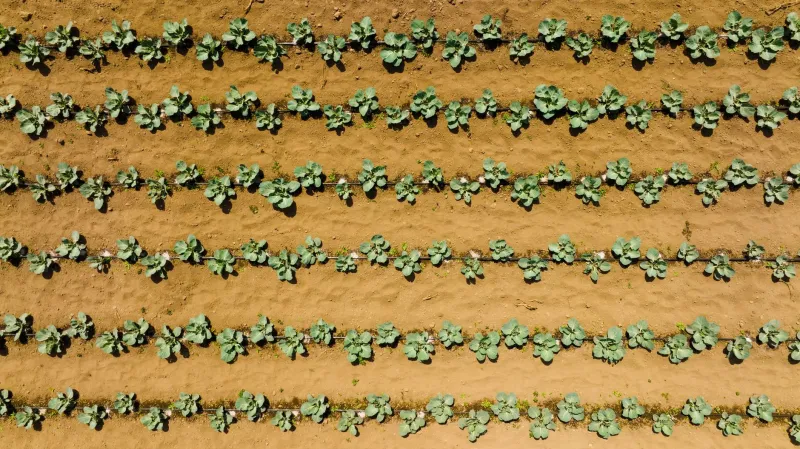
We work with cultivators who treat their soil as a long-term investment rather than a short-term input. That means cover cropping between growing seasons, composting organic matter back into the earth, and avoiding synthetic fertilizers that can disrupt the microbial ecosystem in the soil. Healthy soil biology is genuinely one of the less-discussed factors in hemp quality — mycorrhizal fungi and beneficial bacteria help plants access nutrients more efficiently, which translates directly into a more potent and consistent plant.
We also prioritize transparency about where our hemp comes from, because we think you deserve to know. When a company can't — or won't — tell you which state or region their hemp originates from, that's a detail worth noticing. Vague sourcing language like "domestic hemp" or "US-grown" without any further specificity is a gap in the story.
Our cultivation partners undergo regular soil testing, and those results inform not just what they grow but how they amend and care for the land over time. The goal is consistency across harvests, which is harder to achieve than it sounds when you're working with a living plant in a variable environment.
The Extraction Link: Why Good Source Material Can't Be Faked
Here's something the CBD industry doesn't always say loudly enough: no extraction method can add quality that wasn't present in the raw plant. CO2 extraction, ethanol extraction, and other sophisticated techniques are excellent at preserving what's already there and removing what shouldn't be. But they can't manufacture a rich terpene profile from a nutritionally depleted plant, and they can't conjure CBD concentration that the plant never developed.
This is why terroir matters even if you're primarily focused on extraction quality. The two are sequential, not interchangeable. Great extraction applied to mediocre source material still produces a mediocre extract. Great source material, carefully extracted, is where genuinely effective CBD products come from.
Think of it like cooking. A talented chef can elevate good ingredients into something remarkable. But they can't turn a flavorless, out-of-season tomato into something that tastes like it came from a summer garden in New Jersey at peak ripeness. The raw material sets the ceiling.
Questions Worth Asking Before You Buy
Armed with this context, here are a few questions that can help you evaluate any CBD gummy brand more meaningfully:
- Where specifically is the hemp grown? State-level answers are a start; regional specificity is better.
- Does the company test soil, not just the final product? Soil testing upstream is a sign of serious quality control.
- Is the hemp organically cultivated? Certified organic farming practices protect both the plant and the person consuming it.
- Can the brand explain why they chose their growing region? A thoughtful answer signals that sourcing was a deliberate decision, not just the cheapest available option.
You don't need a botany degree to ask these questions, and any brand worth buying from should be able to answer them without hesitation.
The Bigger Picture
When you pop a Golden Farm CBD gummy, you're not just consuming an extract in a sugar coating. You're at the end of a long chain that started in a specific field, in specific soil, under a specific sky. The decisions made at the beginning of that chain — where to grow, how to tend the land, when to harvest — ripple forward into everything that follows.
That's not marketing language. It's just how plants work.
And the more you understand it, the better equipped you are to find CBD products that actually do what you're hoping they'll do.